


ATV overheating is one of the most common problems riders face, especially when riding in demanding off-road conditions. It usually doesn’t start suddenly or without warning. The temperature slowly rises, the cooling fan runs nonstop, and before long the ride is interrupted by an overheating warning or forced stop.
In many cases, ATV overheating is not caused by a faulty engine or cooling component. It’s the result of how and where the ATV is being used, combined with design limitations that become obvious in mud, slow terrain, and water-heavy conditions.
Why ATVs Overheat More Often Than You Expect
Most ATVs are designed to operate efficiently when there is steady airflow. On open trails or faster gravel roads, cooling systems work as intended. Problems begin when airflow is reduced.
Slow riding, deep mud, and technical terrain all limit natural airflow. At the same time, mud and debris get thrown directly at the radiator, especially on ATVs with a front-mounted, low-positioned radiator. As the radiator becomes covered in mud, airflow drops even further, and engine temperatures rise quickly.

The same issue often appears during everyday work tasks, such as cutting grass or plowing snow. When mowing, fine grass clippings and dust can quickly clog the radiator fins, while snow plowing packs wet snow and ice directly against the radiator surface. In both cases, airflow is restricted in a similar way to mud riding, leading to ATV overheating even outside off-road conditions.
This is why ATV overheating often happens during rides that involve mud riding, swampy terrain, or frequent water crossings.
How Mud Makes ATV Overheating Worse
Mud doesn’t just splash onto the radiator — it sticks. Wet clay and thick mud fill the gaps between radiator fins, trapping heat and preventing air from passing through. Even with the cooling fan running continuously, the radiator simply can’t dissipate heat efficiently once it’s clogged.
Over time, riders start to notice a pattern: overheating occurs faster in muddy conditions, and temperature only drops after stopping to clean the radiator. This cycle repeats throughout the ride and becomes increasingly frustrating.
At some point, most riders start noticing the same signs:
-
the engine temperature rises much faster in mud than on dry trails;
-
the cooling fan runs almost nonstop;
temperatures only drop after stopping to clean the radiator;
Why Cleaning the Radiator Only Solves the Problem Temporarily
Cleaning the radiator does help, but only for a short time. As soon as riding continues, fresh mud builds up again and airflow is reduced. Radiator screens and guards can limit larger debris, but they don’t stop fine mud from coating the radiator surface.

Because the radiator remains exposed to mud spray, ATV overheating continues to be an issue regardless of how often it’s cleaned. This is usually the point where riders realize the problem isn’t maintenance — it’s radiator placement.
Radiator Relocation: A Long-Term Fix for ATV Overheating
A radiator relocation kit addresses the root cause of ATV overheating by moving the radiator away from the mud zone. Instead of sitting low at the front, the radiator is relocated to a higher, cleaner area where airflow is more consistent and exposure to mud is significantly reduced.
Once relocated, the radiator stays cleaner for longer periods, airflow improves, and overheating becomes far less common. Riders often notice they can complete longer rides without stopping to clean the radiator or monitor engine temperature constantly.
For riders who frequently experience ATV overheating in mud, radiator relocation is a reliability-focused upgrade rather than a cosmetic modification.
Where Snorkel Kits Fit Into the Picture
While radiator relocation improves cooling, it doesn’t protect the engine from water entering the intake. This is where a snorkel kit becomes useful. By raising the air intake to a higher point, a snorkel reduces the risk of water ingestion during deep water or mud crossings.
Snorkel kits are most relevant for riders who regularly push their ATVs through swamp terrain, deep mud holes, or water-heavy trails. In more extreme riding conditions, snorkels are often combined with radiator relocation to reduce both overheating and engine damage risks.
Do You Really Need These Upgrades?
Not every rider experiences ATV overheating. If riding is mostly limited to dry trails or faster terrain, the stock cooling setup may be sufficient. However, repeated overheating in mud or slow technical sections is a strong indication that the ATV’s cooling system isn’t suited to the riding conditions.
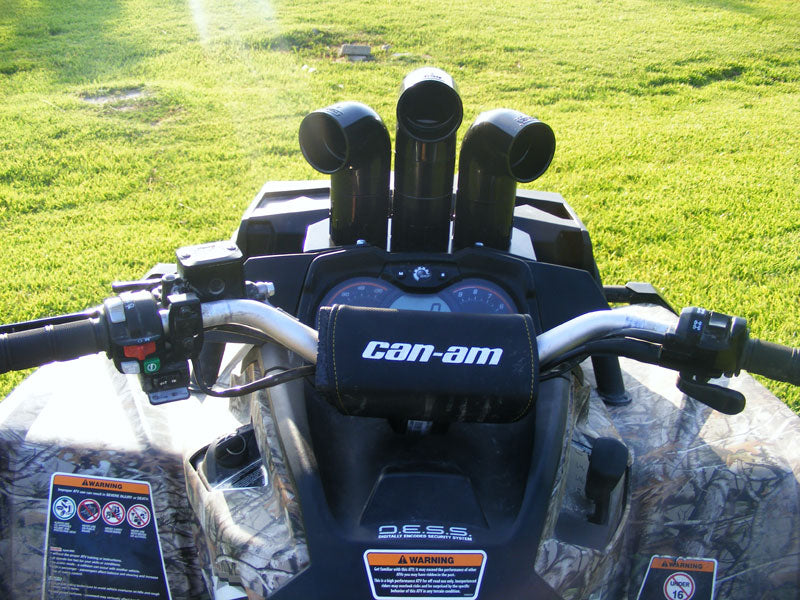
Radiator relocation and snorkel kits don’t change how much power the ATV makes or how it feels to ride. Their purpose is simple — to keep the engine operating at safe temperatures when conditions are harsh.
Final Thoughts on ATV Overheating
ATV overheating isn’t random, and it usually isn’t caused by a defective part. It’s the natural result of restricted airflow, radiator clogging, and demanding riding environments. Once that’s understood, the solution becomes clear.
Improving airflow and protecting critical components allows riders to spend more time riding and less time dealing with overheating issues. For anyone who regularly rides in mud, addressing ATV overheating properly can make a significant difference in reliability and overall riding experience.
For riders who want to fix ATV overheating properly, Parts4Quads provides carefully selected radiator relocation and snorkel solutions built for demanding off-road use.


